A common mistake among beginners is skipping keyword research entirely, or picking keywords based on gut feeling, then wondering why their posts never rank. This keyword research tutorial exists because that pattern is so widespread, and so fixable. Well-crafted content with optimized meta tags can still sit on page 5 if the keyword selection was never validated against real search demand or realistic ranking competition. The missing piece is almost always the same: writers never confirmed whether anyone was actually searching for what they wrote about, or whether their site had a realistic shot at ranking for it.
This is one of the most common questions we get from readers here at AISEO Round Table, and the answer is always the same: keyword research is not optional. It is the foundation every piece of content needs before you write the first sentence. Without it, you are guessing. With it, you are making data-backed decisions that stack the odds in your favor.
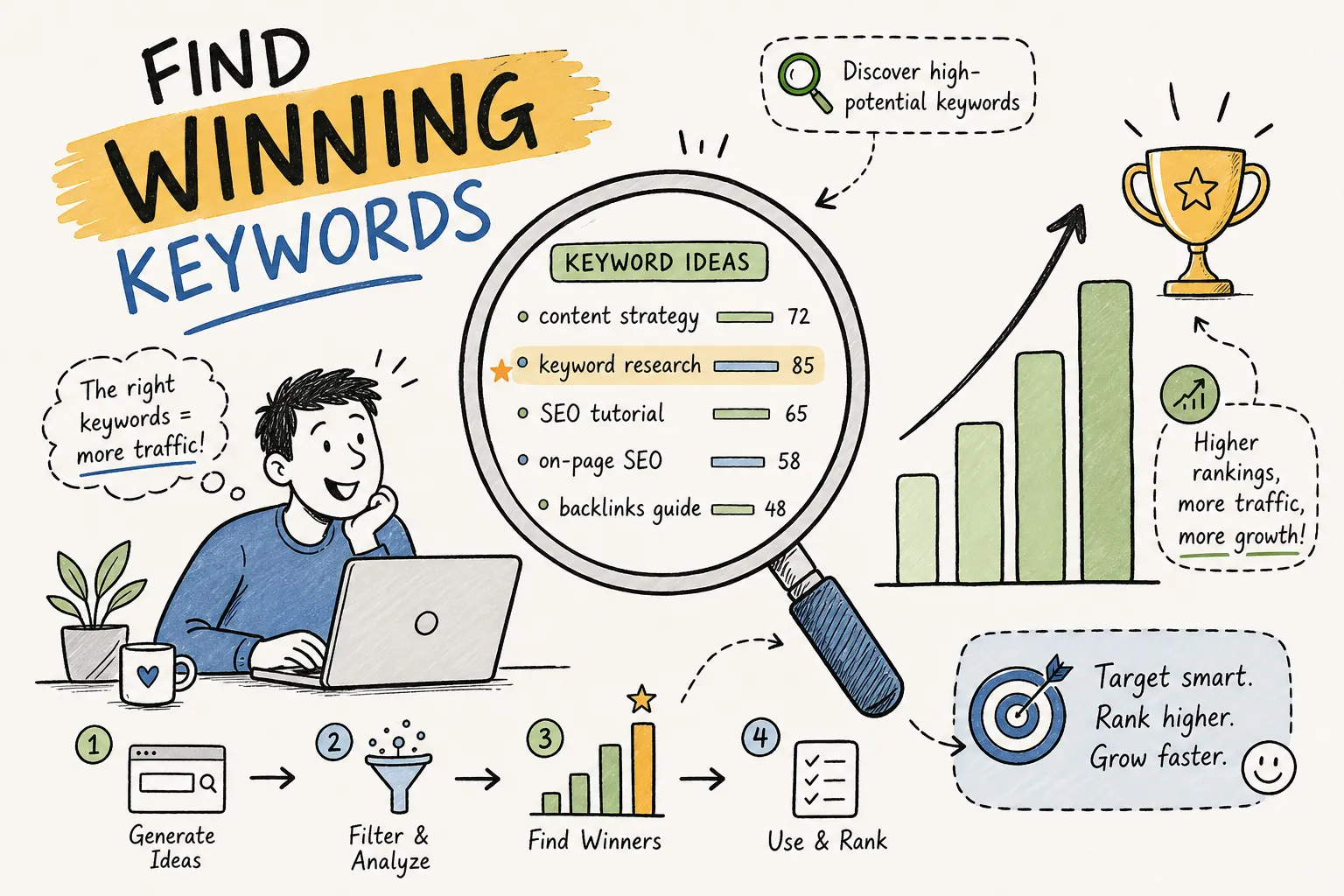
This guide walks you through the full SEO keyword research process in five concrete steps: generating seed keywords, expanding your list with tools, reading the numbers correctly, matching keywords to search intent, and building a prioritized content plan. By the end, you will have everything you need to go from a blank page to a mapped, ready-to-execute content strategy.
Keyword Research Tutorial Step 1: How to Generate Your First Seed Keywords
Seed keywords are the broad, 1, 3 word topics that represent your site’s main subjects. Think of them as the starting point before any tool enters the picture. Every solid research process begins here, because if your seeds are off-target, everything that follows will be too.
The most common mistake at this stage is using your own marketing language instead of your audience’s actual words. The terms you use internally are rarely the terms your audience types into Google. The fix is straightforward: stop guessing and start listening.
Brainstorm from your audience’s actual language
Real keyword ideas live where your audience talks. Reddit threads, YouTube comment sections, Amazon reviews, and competitor FAQ pages all contain the exact phrasing your potential readers use to describe their problems. If you run a personal finance blog and you see “budget spreadsheet” appearing constantly in Facebook groups and Reddit threads, that is a seed keyword worth adding to your list.
Preserving the audience’s exact wording matters more than polishing it. The phrase “how do I stop living paycheck to paycheck” is more valuable as a seed than the cleaner-sounding “financial planning basics,” because the first one reflects how real people actually search.
Mine first-party data for instant keyword ideas
If you have access to Google Search Console, the Performance report is a goldmine for seed ideas. It shows the actual queries that already bring impressions to your site, including terms you may never have thought to target deliberately. Sort by impressions and look for broad, recurring themes rather than exact page titles.
On-site search data and your analytics platform are useful secondary sources. Pages with high traffic but low engagement often hint at adjacent topics your visitors expected to find. Before touching any keyword tool, aim to compile a starting list of 3, 5 anchor seed keywords drawn from these sources, that number is enough to generate a rich working set in the next step without creating an unwieldy input list. That list becomes the input for Step 2. For more on the value of using your own analytics as a keyword source, see this piece on first-party data value.
Keyword Research Tutorial Step 2: How to Expand Your Seed List Using Keyword Research Tools
Once you have your seeds, a keyword research tool does the heavy lifting of expanding them into hundreds of related terms. This is where you move from a rough idea list to a real working keyword set with volume data, difficulty scores, and related variations attached.
Free tools that give you real search data
Google Keyword Planner is the strongest free starting point because it pulls directly from Google’s ad data, making it the most reliable no-cost source for search volume estimates. Pair it with Google Trends to check seasonality and see whether a topic is growing or declining over time. The main limitation is that free tools often show volume ranges instead of exact numbers, which makes deeper analysis harder.
For question-based and long-tail keyword discovery, tools like AnswerThePublic and AlsoAsked surface People Also Ask-style clusters that are excellent for planning blog posts and FAQ sections. These work well alongside Keyword Planner because they fill in the conversational, question-format keywords that ad-focused tools often miss.
Why KWFinder works well for beginners on a budget
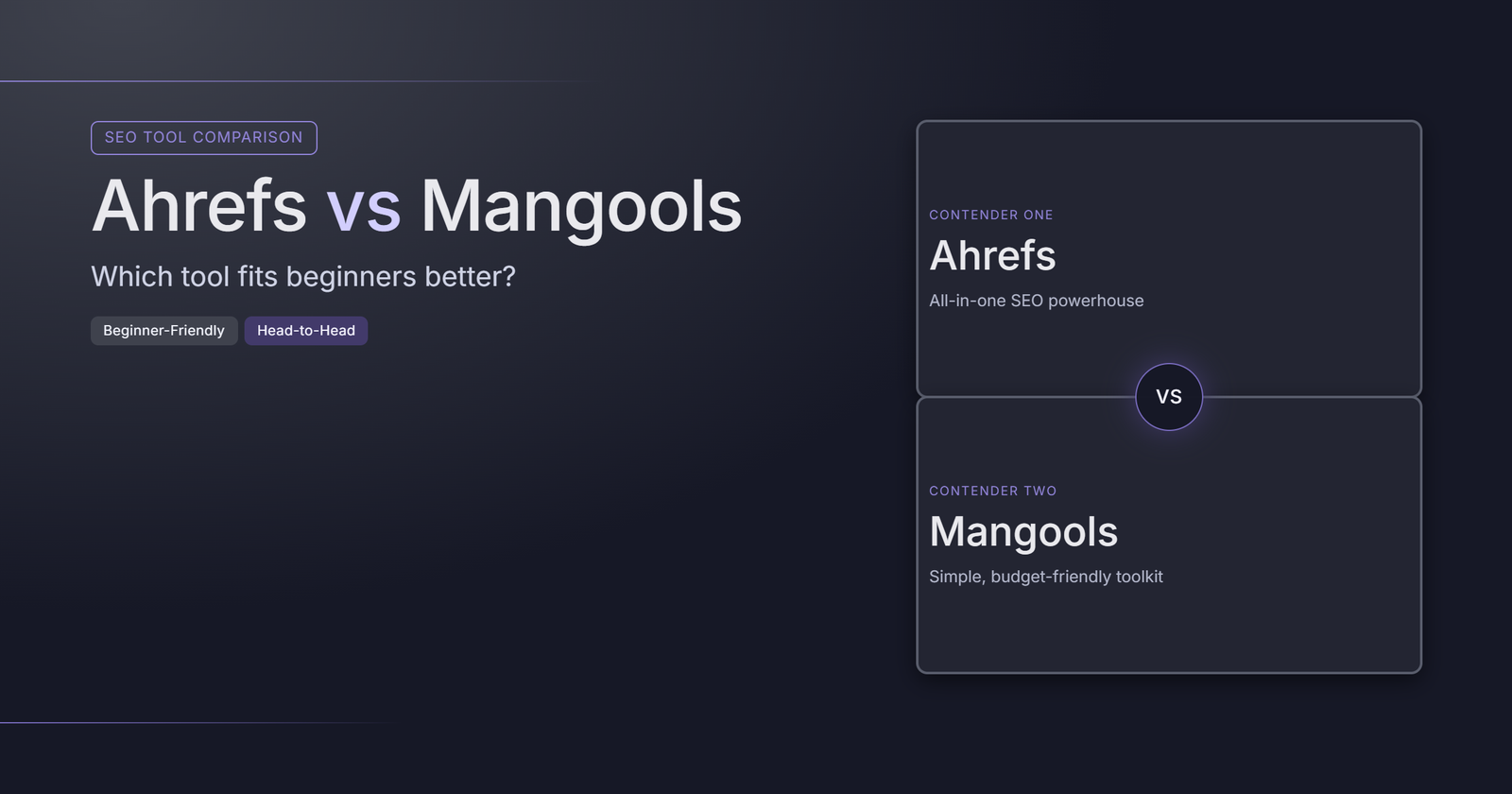
KWFinder by Mangools is a beginner-friendly, budget-conscious option that sits in a very different category from enterprise platforms. The interface shows keyword difficulty, related keyword suggestions, and search volume data all in one clean view, no complex dashboard to navigate, no dozen competing metrics to untangle.
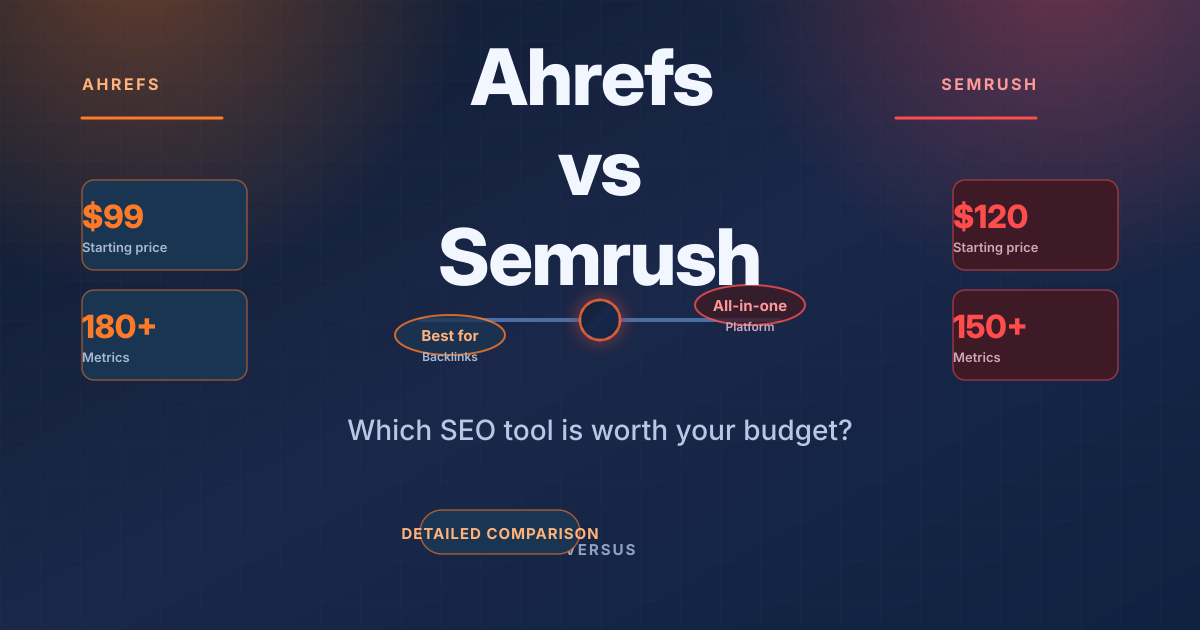
The pricing is a fraction of what larger platforms charge. The Mangools Basic plan runs around $34/month (billed annually, though prices can vary by region and change over time, check the Mangools site for current rates). At AISEO Round Table, KWFinder is one of the tools we review and return to regularly; see our piece on Best Keyword Research Strategies to Boost Your SEO, AISEO Round Table for practical approaches that pair well with budget tools. Ahrefs and Semrush are more powerful at scale, but for someone just building out their first keyword map, the simpler interface reduces friction and speeds up the learning curve.
Step 3: Reading the Numbers, Volume, Difficulty, and What They Actually Mean
Sorting by highest search volume and targeting whatever appears at the top of the list is one of the most reliable ways to stall a new site on page 5 for months. The numbers only help if you know how to read them in context, and that means understanding both what they measure and what they do not.
What search volume actually tells you (and when to ignore it)
Monthly search volume is a rough estimate of how many times a keyword is searched per month, not a guaranteed traffic number. A keyword pulling 200 searches per month with low competition will almost always drive more traffic for a new site than a 20,000-search keyword dominated by established domains. The traffic you can realistically capture matters far more than the theoretical ceiling.
This is where long-tail keywords become your best friend as a beginner. Long-tail terms are more specific, face lower competition, and tend to convert at higher rates because the search intent is much clearer. As a practical starting point, newer blogs typically see the best early results targeting keywords in the 100, 1,000 monthly search range, then expanding into the 1,000, 5,000 range as the site builds authority. Chasing anything above that tier too early is one of the most common ways new sites waste months of effort.
How to read keyword difficulty scores across tools
Most SEO tools use a 0, 100 keyword difficulty scale, but the scores are not interchangeable between platforms. Ahrefs bases its KD score on the number of referring domains pointing to the current top-10 results. Semrush uses a weighted analysis of backlink strength and SERP characteristics. A score of 40 in Ahrefs and a score of 40 in Semrush are measuring different things, treat each tool’s scale on its own terms; see this discussion on inconsistent keyword search volume and difficulty across tools for more context.
As a working heuristic at AISEO Round Table: 0, 30 is generally approachable for newer sites, 31, 60 requires established authority, and 61, 100 is typically territory for high-authority domains. Quick heads-up on a common point of confusion: Google Keyword Planner’s “Competition” label reflects advertiser competition in Google Ads, not organic ranking difficulty. Beginners frequently mix up the two and draw the wrong conclusions about how hard a keyword actually is to rank for.
Step 4: Matching Keywords to Search Intent Before You Write
Skipping search intent analysis is one of the main reasons well-optimized pages still fail to rank. Google is not just matching keywords to pages, it is matching user goals to the type of content that satisfies those goals. If your content format does not align with what the SERP already shows, your page will struggle no matter how well it is written. For a deeper look at intent-focused optimization, see Search Intent: The Key to Ranking Content, AISEO Round Table.
The four intent types and the content format each one calls for
Intent breaks down into four categories, each with a clear content format match:
- Informational: the user wants to learn something. Best format: blog post, guide, or tutorial.
- Commercial investigation: the user is comparing options before buying. Best format: comparison post, best-of list, or review.
- Transactional: the user is ready to act or buy. Best format: product page, pricing page, or signup landing page.
- Navigational: the user is looking for a specific brand or page. Best format: brand-specific page or homepage.
A practical example: “how to do keyword research” is informational, so a detailed tutorial is the right fit. “KWFinder vs Semrush” is commercial investigation, so a structured comparison article works. “Buy Mangools plan” is transactional, so a pricing or landing page is the correct format. Matching the format to the intent is non-negotiable if you want to compete on page one.
The SERP test: how to confirm intent in under two minutes
The fastest way to verify intent is to search the keyword in Google and look at the top 5, 10 results. Note the dominant content type: are you seeing blog posts, product pages, comparison articles, or something else? Then note the dominant format: how-to guides, listicles, reviews, or tutorials? Whatever dominates page one is what Google has determined satisfies that query.
SERP features carry intent signals too. Shopping results point toward transactional intent. Featured snippets often indicate informational intent. Video carousels suggest that multimedia content performs well for that query. The rule is straightforward: match the content type and format that already dominates page one, because that is what is already working.
Step 5: Building Your Keyword Map and Prioritized Content Plan
This is where the keyword analysis work becomes action. A keyword mapping template turns a list of validated terms into a structured content plan with a clear publication order, so you stop sitting on a spreadsheet and start publishing strategically.
How to cluster keywords into a topic map
Keyword clustering means grouping related keywords that share the same search intent and topic theme under one page, rather than creating separate pages that end up competing with each other. The practical framework for this is the pillar-cluster model: one broad pillar page covers the main topic, and several supporting cluster pages cover specific subtopics, each linking back to the pillar. For guidance on implementing topic clusters and pillar pages, see this walkthrough on pillar-cluster strategy.
For an AISEO Round Table-style site, a pillar page on “keyword research” might be supported by clusters covering KWFinder reviews, how to evaluate keyword difficulty, long-tail keyword strategy, and SERP analysis explained. Each cluster page deepens the topical authority of the pillar while targeting its own specific, lower-competition search terms. A mistake worth flagging: creating multiple pages targeting similar keywords splits your ranking signals, in most cases, each primary intent should be owned by a single page. (Exceptions include localized versions of a page or queries with genuinely mixed intent, where consolidation may not be appropriate.)
A simple scoring system to decide what to publish first
Not every keyword cluster deserves equal priority. A straightforward way to decide publication order is to score each cluster on three dimensions: business relevance (1, 5), ranking feasibility based on keyword difficulty (1, 5), and traffic potential based on search volume (1, 5). Add the scores and publish in descending order of total score. This is a simplified version of scoring frameworks that also factor in search intent fit and content reuse potential, useful additions as your plan grows more complex.
Your keyword mapping template spreadsheet should include columns for URL or page name, page type (pillar, blog post, comparison, landing page), primary keyword, secondary keywords, search intent, priority score, and target publish date.
Start small: pick three to five keyword clusters from your research, assign each one a page type, and build from there. Trying to plan 50 pieces at once leads to paralysis, not progress.
Your Next Step Starts with a Few Keywords
This keyword research tutorial has walked you through five repeatable steps: generate seeds from audience language and first-party data, expand them with tools like KWFinder or Google Keyword Planner, evaluate search volume and keyword difficulty in context, match every keyword to the right content format based on intent, and map the results into a prioritized content plan using a keyword mapping template. None of these steps requires advanced technical skills, they require consistency and a clear framework.
Keyword research is not a one-time task. As your site grows and you publish more content, you will revisit this process to find new opportunities, update underperforming pages, and expand into higher-difficulty terms you could not compete for at the start. Treat it as an ongoing habit, not a box to check before launch.
If you want to go deeper on any of these steps, AISEO Round Table has detailed tutorials covering KWFinder features and pricing, SERP analysis workflows, and on-page optimization techniques. Start with our primer Keyword Research: What It Is and Why It Matters, AISEO Round Table for foundational concepts and then explore advanced strategy in Best Keyword Research Strategies to Boost Your SEO, AISEO Round Table. That one action puts you further ahead than most bloggers who are still publishing on gut feeling alone.