
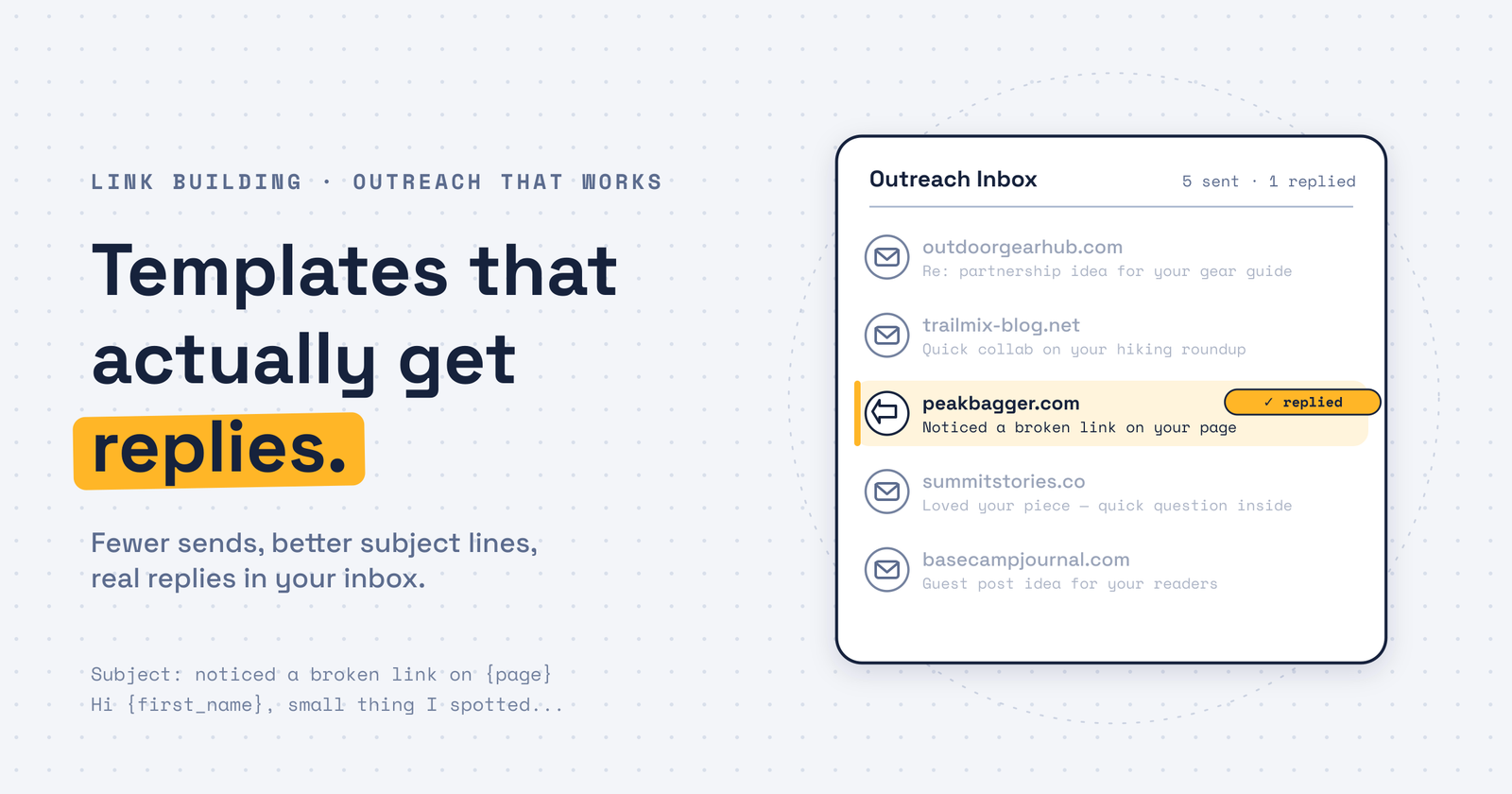
Why Most Outreach Emails Get Ignored
Every website owner with a functioning inbox has seen the same email a hundred times. It opens with a compliment that feels copied from a template generator, moves straight into a request for a backlink, and closes with a signature that belongs to someone who clearly never read the page they are emailing about. It gets deleted in about four seconds.
Link building outreach has a reputation problem, and that reputation is earned. Most people treat it as a numbers game. Send five hundred emails, hope for a two percent reply rate, and call it strategy. The problem is that this approach burns your domain reputation, wastes the recipient’s time, and produces links from sites that were never a good fit in the first place.
The good news is that outreach still works when it is built around genuine value and real research. Editors, bloggers, and site owners reply when they can tell a human being actually looked at their content and has something worth their time. This guide walks through the templates, structure, and habits behind outreach emails that get opened, read, and answered.
What Makes an Outreach Email Actually Work
Before getting into templates, it helps to understand what separates a reply from a delete. Three things matter more than clever wording.
The first is relevance. The email has to connect to something the recipient already cares about, whether that is their own content, their audience, or a problem on their site.
The second is brevity. Busy editors are not going to read six paragraphs from a stranger. The best outreach emails can be read in under fifteen seconds.
The third is a clear, low effort ask. If the recipient has to guess what you want or do extra work to say yes, they will simply move on to the next email in their inbox.
Templates help with structure, but they only work when the details inside them are true and specific. A template filled with generic praise is just a longer version of the spam email everyone already ignores.
The Research Step Nobody Wants to Do
Every effective outreach campaign starts before a single email is written. This is the part most people skip because it takes time, and it is also the part that determines whether your reply rate is two percent or twenty percent.
Good research means knowing exactly which page you are pitching, why it makes sense for a link from your site, and what the site owner might personally get out of helping you. This is where tools like Ahrefs become genuinely useful, since they help you find broken links, competitor backlinks, and resource pages worth targeting. If you are still deciding which platform fits your workflow and budget, this Ahrefs Review 2026 breaks down features, pricing, and who the tool is really built for, which is a useful starting point before you commit to a paid plan.
Keyword and topic research also plays a role here, since the pages most likely to earn you a link are ones already ranking for topics adjacent to yours. A structured approach to finding those pages, similar to the process described in this guide on how to do keyword research, makes it much easier to spot resource pages and content gaps worth pitching.
Template 1: The Broken Link Replacement
Broken link building remains one of the highest reply rate strategies because you are doing the site owner a favor before you ask for anything.
Subject line: Found a broken link on your [topic] page
Body:
Hi [First Name],
I was reading your article on [exact page title] and noticed the link to [broken resource] is no longer working. It points to a 404 now.
I put together a resource on [your topic] that covers the same ground and might work as a replacement. Here it is if useful: [your link]
Either way, thought you would want to know about the broken link.
Thanks for the article, it was a genuinely helpful read.
[Your Name]
This works because the value comes first. The link request is almost an afterthought, which lowers the pressure on the recipient and makes saying yes feel easy.
Template 2: The Resource Page Addition
Resource pages are curated lists that site owners actively maintain, which means they are already expecting suggestions from outside contributors.
Subject line: Suggestion for your [topic] resource list
Body:
Hi [First Name],
Your resource page on [topic] is one of the more complete lists I have found on this subject, especially the section on [specific detail from the page].
I recently published a guide on [your topic] that covers [specific angle not already on their list]. Thought it might round out the collection: [your link]
No worries if it is not the right fit. Appreciate you keeping a list like this updated.
[Your Name]
Mentioning a specific detail from their page proves you actually visited it, which is often the single biggest trust signal in the entire email.
Template 3: The Guest Post Pitch
Guest posting still earns links when the pitch shows editorial thinking rather than a generic offer to write.
Subject line: Idea for a guest post on [specific angle]
Body:
Hi [First Name],
I have been following [publication name] for a while, and noticed you have not covered [specific angle] in much depth, even though you have touched on [related topic] a few times.
I would like to pitch a piece on [specific angle], written specifically for your audience, with practical examples rather than general advice. Happy to send an outline first if that is easier to evaluate.
Let me know if this fits your editorial calendar.
[Your Name]
Editors reply to pitches that read like they were written for their exact publication, not one that was copy pasted to fifty other sites the same morning.
Template 4: The Competitor Mention Upgrade
This template works when a site has linked to a competitor of yours in a comparison, roundup, or list post.
Subject line: Another option worth adding to your [topic] list
Body:
Hi [First Name],
Saw your article covering [competitor tool or resource] and thought it was a solid rundown of the space.
We built [your product or resource], which approaches [specific problem] a bit differently, particularly around [specific differentiator]. Might be worth a look if you ever update the post.
Here is the page if it helps: [your link]
Thanks for putting together a useful list either way.
[Your Name]
Comparisons like this Ahrefs vs Mangools breakdown or this Ahrefs vs Semrush comparison are the kind of pages this template targets well, since the author has already shown willingness to compare multiple tools side by side.
Template 5: The Follow Up That Doesn’t Feel Pushy
Most replies come from a second or third email, not the first one. A good follow up adds a small piece of new value instead of just repeating the same ask.
Subject line: Quick follow up
Body:
Hi [First Name],
Following up on my note from last week about [specific topic]. No pressure at all if it is not a fit.
One more thing I noticed while looking at your site, [small genuinely useful observation about their content or site]. Figured I would mention it regardless of the link.
[Your Name]
This template works because it does not sound like a reminder. It sounds like a person who kept thinking about their site after the first email.
Subject Lines That Get Opened
The subject line decides whether the rest of the email gets read at all. A few patterns consistently perform well.
Specific and factual subject lines beat vague or salesy ones. “Broken link on your SEO tools page” will always outperform “Great content, quick question.”
Short subject lines, generally under seven words, read better on mobile inboxes where most emails are now opened first.
Avoiding words that trigger spam filters, such as free, guaranteed, or click here, keeps deliverability rates higher across an entire outreach campaign.
Personalization Without Wasting Hours
Full manual research on every single prospect is not realistic once a campaign grows past a handful of targets. The goal is not maximum personalization on every email, but enough personalization that the recipient can tell a real person sent it.
A workable system looks like this. Batch prospects by the type of page they run, such as resource pages, broken link candidates, or comparison posts. Write one strong template per batch. Then spend just two or three minutes per email adding one specific detail unique to that page, whether it is a quote, a section title, or a recent update date.
This keeps volume manageable while still hitting the relevance bar that separates a reply from a delete.
Timing, Tools, and Sending Cadence
Outreach emails sent early in the recipient’s work week, particularly Tuesday through Thursday mornings in their time zone, tend to see higher open rates than weekend or Monday sends, when inboxes are often flooded with backlog.
Spacing matters as much as timing. Sending a first email, waiting five to seven days, then following up once, and waiting another week before a final follow up tends to produce better results than sending three emails in rapid succession, which reads as impatient rather than persistent.
A CRM or simple spreadsheet tracking who was contacted, when, and what template was used prevents duplicate emails and helps identify which templates and subject lines are actually converting into replies over time.
Tracking Replies and Improving Over Time
Reply rate is the metric that matters most, more than open rate or send volume. A campaign that sends fifty highly targeted emails and gets ten replies is far more valuable than one that sends five hundred emails and gets the same ten replies, since the second approach damages sender reputation and wastes hours of manual work.
Track reply rate by template, by prospect type, and by subject line separately. Patterns usually show up after the first fifty or so emails, at which point it becomes clear which templates are worth scaling and which need to be rewritten or dropped entirely.
It also helps to periodically revisit your own site’s technical health, since a slow site or one that recently dropped in rankings can undercut even a perfectly written outreach email. If your traffic has taken a hit after an algorithm change, working through steps like those in this guide on how to recover from a Google core update can make your pitch land better, since the page you are promoting will actually perform once the link is in place.
Conclusion
Outreach that gets replies is not about clever tricks or a magic subject line formula. It comes down to doing real research, respecting the recipient’s time, and offering something genuinely useful before asking for anything in return. The five templates covered here, broken link replacement, resource page additions, guest post pitches, competitor mention upgrades, and low pressure follow ups, all share the same foundation. They put the site owner’s interest first and treat the link as a natural next step rather than the entire point of the email.
Build a short list of well researched prospects, personalize just enough to prove you looked, and track what works so your next campaign starts smarter than the last one. Reply rates in outreach are earned one relevant, well timed, well written email at a time.
Frequently Asked Questions
How many outreach emails should I send before expecting results? Most campaigns need at least fifty to one hundred well researched emails before clear patterns in reply rate emerge. Sending fewer than that makes it hard to tell if a template is actually working or if you just got lucky or unlucky with a small sample.
What is a good reply rate for link building outreach? Reply rates vary widely depending on niche and research quality, but a well targeted campaign using personalized templates typically sees somewhere between ten and twenty five percent replies, compared to one or two percent for generic mass emails.
Should I offer payment for backlinks in my outreach emails? Paid link placements carry real risk under current search engine guidelines and can lead to penalties if discovered. It is safer and more sustainable to build outreach around genuine value, such as broken link fixes, unique resources, or well researched guest content.
How long should I wait before following up on an outreach email? A gap of five to seven days between the first email and a follow up tends to work well. This gives the recipient enough time to see the email without letting it go cold, and a single follow up is usually enough if the first pitch was genuinely relevant.
Do shorter outreach emails really perform better than longer ones? Yes, in most cases. Editors and site owners scan emails quickly, so a pitch that makes its point in under six sentences tends to get read in full, while long emails often get skimmed or ignored entirely.
What tools help most with finding outreach opportunities? Backlink and SEO research platforms are the most useful starting point for finding broken links, resource pages, and competitor mentions worth targeting, alongside manual searches using site specific search operators to find relevant pages directly.