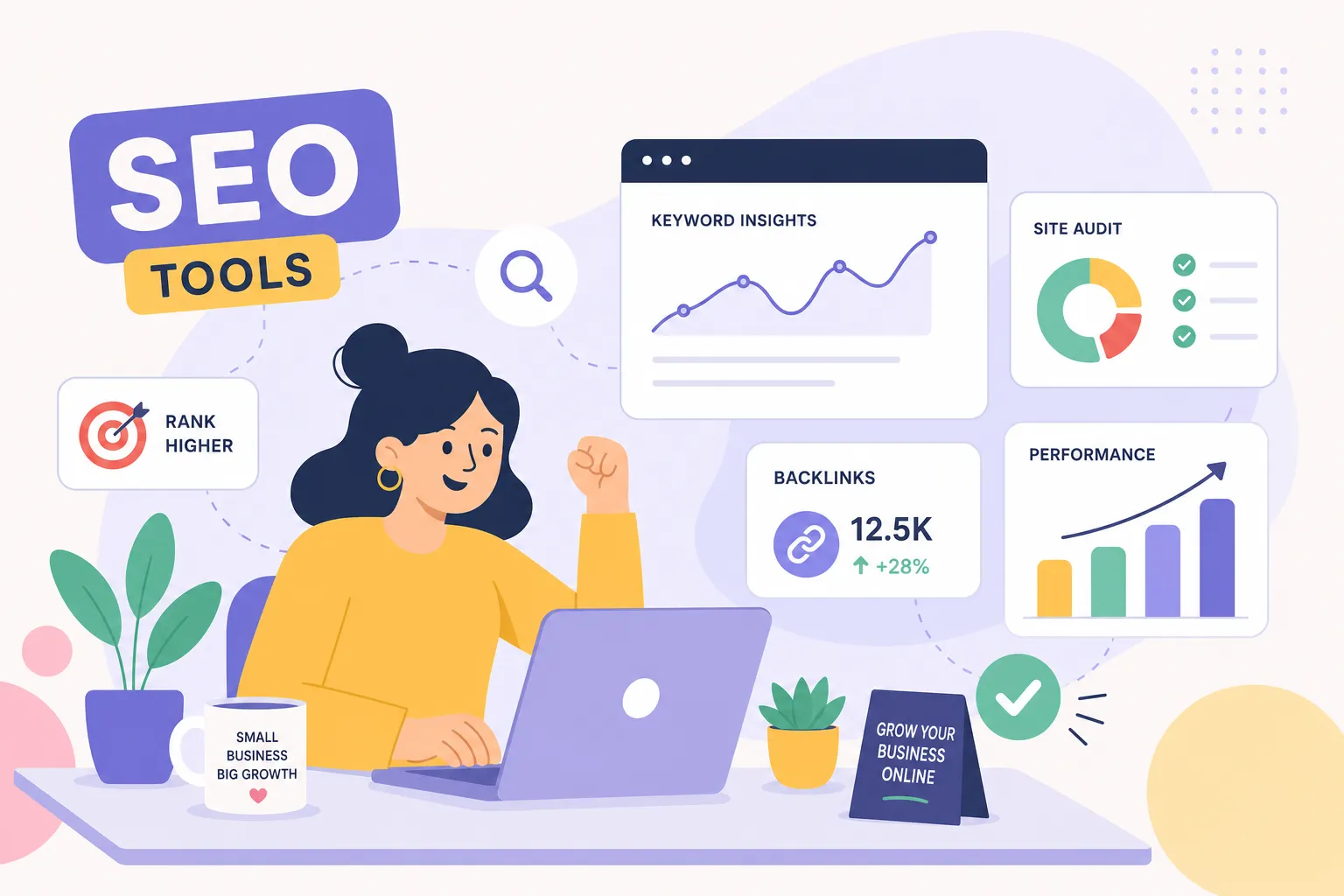
Many small business owners searching for the best SEO tools for small business fall into one of two traps. They either overpay for agency-grade platforms packed with features they’ll never use, or they rely entirely on Google alone and wonder why nothing is moving. Neither approach works, and neither is your fault, the SEO software market isn’t designed with you in mind.
Many enterprise SEO platforms are built for marketing agencies juggling multi-client workflows and large-scale campaigns. The pricing, the feature sets, the dashboards, all of it is calibrated for teams, not solo operators running a plumbing business or a niche content site. At AISEO Round Table, we’ve hands-on tested and reviewed these platforms specifically for non-agency users: bloggers, local business owners, and lean content teams who need real results without a $500/month software bill. (You can see our full methodology and individual tool reviews linked throughout this guide.)
By the end of this article, you’ll know exactly which 1, 3 tools fit your budget and goals, what to expect from each, and how to put them to work within 30, 60 days.
What separates a great SMB SEO tool from an overpriced one
Ease of use and time investment
Small business owners are not full-time SEOs. You’re fitting keyword research between client calls and content audits between invoice follow-ups. Your tool needs to surface useful data fast, without a steep onboarding curve or a 40-tab dashboard that requires a dedicated training week to navigate.
Enterprise platforms like Semrush start at $139/month and deliver enormous feature sets, most of which you won’t need until your site is pulling serious traffic. Interface simplicity is a genuine competitive advantage when you’re doing SEO in the gaps of your actual workday. A tool you open and use every week produces better outcomes than a comprehensive suite that collects digital dust.
Pricing structures worth understanding
Not all SEO tools price the same way, and the differences matter. Some charge flat monthly fees; others limit you by keyword count, tracked domains, audit credits, or user seats. A tool that looks affordable at $20/month can quietly get expensive once you factor in the features locked behind the next pricing tier.
The realistic budget for a productive small business SEO stack is $0, $50/month. Free tools from Google cover your performance foundation. One paid tool in the $29, $50 range handles keyword research, rank tracking, and site auditing. That combination covers the core DIY SEO workflow that most small businesses actually need to gain traction, without paying for features built for much larger operations.
Best SEO tools for small business: free options that belong in every setup
Google Search Console: your most honest data source
Google Search Console is completely free for any verified website, and it remains one of the most underused tools in the small business SEO world. Many owners connect it once and never check it again, a real missed opportunity. Search Console shows you exactly which queries are driving clicks, which pages have indexing issues, and where your site drops off in search. This data comes directly from Google, so there’s no estimation or approximation involved.
Google Analytics 4: connecting SEO to actual business outcomes
GA4 is free and pairs directly with Search Console, giving you a complete picture of how organic traffic behaves after it lands on your site. The key shift it enables is moving from tracking rankings to tracking results: which pages convert, which generate leads, and which ones attract traffic but do nothing for your business goals. Set it up alongside Search Console from day one.
Ahrefs Webmaster Tools: free backlink and audit data for your own site
Ahrefs Webmaster Tools is free for verified site owners and covers two things paid tools normally charge for: a site audit with 170+ technical and on-page SEO checks, and backlink visibility for your own domain. You can see broken links, missing meta tags, slow pages, and your full backlink profile at no cost. The limitation is that data only covers your verified sites; competitor research requires a paid plan. As a free addition to your Search Console setup, it adds real value without adding to your monthly bill.
Top affordable paid SEO tools small businesses actually use
Mangools: a strong value pick for keyword research and rank tracking
Mangools starts at around $29/month and packages five integrated tools into one clean interface: KWFinder for keyword research, SERPChecker for SERP analysis, SERPWatcher for rank tracking, LinkMiner for backlink research, and SiteProfiler for domain analysis. The platform is designed specifically for non-technical users, which shows in how data is presented and how quickly you can go from setup to first insight.
In one reported case, a small eCommerce site using KWFinder achieved significant organic traffic growth over a three-month period by targeting low-competition niche keywords, though results will vary by industry, starting authority, and execution. Note that vendor case studies are not independently audited, so treat them as directional rather than guaranteed outcomes. If you want a full breakdown of every Mangools feature, read our in-depth Mangools review at AISEO Round Table, where we cover every pricing tier, the included tools, and exactly who gets the most value from each plan.
For additional curated lists of recommended tools, see this roundup of the best SEO tools for small businesses in 2025 and a practical 10 best SEO tools for small businesses list that many small owners find useful when comparing options.
SE Ranking: a full-suite option under $50/month
SE Ranking ranges from $44, $52/month and covers keyword research, site audits, rank tracking, backlink analysis, and competitor research in a single platform. It includes a 14-day free trial, which makes it the lowest-risk way to test a full-suite platform before committing. The entry plan tracks up to 2,000 keywords daily, substantially more than most alternatives at this price point. For business owners who want one tool for everything without paying Semrush prices, SE Ranking is a strong option in this budget tier.
For an independent take on the platform, see this SE Ranking review that dives into features, limitations, and ideal use cases for small teams.
Ubersuggest: a solid starting point for beginners
Ubersuggest costs around $29/month and targets beginners who want simple, accessible SEO data without a steep learning curve. A lifetime deal option has historically appealed to cost-conscious owners who want to minimize ongoing software costs, though availability can change, so check current pricing before committing. The tradeoff is data depth: Ubersuggest’s keyword database and backlink data are more limited than SE Ranking or Mangools. Treat it as a starting point before graduating to a more robust platform as your SEO efforts grow.
Local SEO tools for businesses that serve specific areas
Google Business Profile: the non-negotiable free starting point
Every local SEO strategy starts here. Google Business Profile is free and directly controls how your business appears in Google Search and Maps, including local pack results and the Knowledge Panel. Regular activity, posts, photo uploads, Q&A responses, and review management, can help improve your local visibility over time. No third-party tool replaces this. If you serve a specific area, get your profile right before spending money on anything else. For tactical steps and priorities, see our Top Local SEO Strategies for Small Businesses, AISEO Round Table.
BrightLocal: a dedicated local SEO platform worth considering
BrightLocal covers citation management, review monitoring, Google Business Profile auditing, and local rank tracking in one dashboard. It’s a solid fit for service businesses that rely on neighborhood-level rankings, plumbers, dentists, contractors, and restaurants where appearing in the local pack translates directly into booked appointments. The pricing sits higher than Mangools or Ubersuggest, but for businesses where local search is the primary growth lever, it can deliver meaningful value. ROI will depend on your market, competition level, and how consistently you use the platform.
For comparisons of local-specific tools, check this overview of the best local SEO tools which highlights tools tailored to neighborhood-level visibility and citation management.
Moz Local and Local Falcon: focused alternatives worth knowing
Moz Local handles business listing consistency across directories and works well if inconsistent NAP data (name, address, phone) is hurting your local rankings. It’s a lower-effort option for keeping your business information synchronized across the web. Local Falcon adds geo-grid rank tracking that shows how your visibility changes block by block across your service area. Neither replaces BrightLocal’s full feature set, but both serve as focused, lower-cost options when your needs are more specific.
How to choose the best SEO tools for small business based on your goals
Matching your tool stack to your SEO priority
Your tool choice should follow your business model. Here’s a practical framework for DIY SEO and content optimization based on where you’re starting:
- Content-focused businesses (bloggers, niche sites, affiliate marketers): Start with Google Search Console plus Mangools or SE Ranking for keyword research and rank tracking.
- Local service businesses (contractors, restaurants, healthcare): Start with Google Business Profile plus BrightLocal; add Moz Local if listing consistency is an ongoing issue.
- Tight budgets under $30/month: GSC + GA4 + Mangools or Ubersuggest covers the core content optimization and tracking needs most small businesses have when getting started.
The goal is to match the tool to your current stage. A well-used $29/month tool produces better results than an underused $139/month suite sitting mostly untouched.
What you don’t need as a small business yet
Enterprise platforms like Semrush at $139/month or Ahrefs at $99/month are powerful, but they contain features that won’t matter until your site scales significantly. Many small businesses using those tools at full price end up paying for capabilities they don’t immediately need. Spending more doesn’t mean ranking faster. Start lean, use what you have consistently, and upgrade when you’ve genuinely outgrown your current setup.
A simple 30, 60 day plan to start seeing measurable results
Days 1, 30: set up, orient, and find your biggest opportunities
The first month is about building your foundation and identifying where the real opportunities are. Start with Search Console, GA4, and Ahrefs Webmaster Tools verification in the first three days. In days 4, 7, set up your paid tool, run your first site audit, and note the top five issues to fix. In week two, run keyword research on your three most important service or product pages and identify 3, 5 low-competition keywords per page. In weeks three and four, optimize those pages by updating title tags, meta descriptions, headings, and body content, then record starting rank positions in your tracker.
Days 31, 60: execute and measure what’s moving
With your foundation set and target keywords identified, the second month is about execution and measurement. Publish or update 2, 4 supporting pages or blog posts targeting long-tail keyword variations. Check rank movement weekly and compare against your Day 1 baseline to see what’s responding. If your business is location-dependent, maintain a consistent Google Business Profile posting cadence and monitor reviews in BrightLocal. The goal in month two is to confirm that your strategy is working, not to declare victory. Realistic ranking gains on lower-competition keywords can begin to appear within 30, 60 days; broader improvements typically take 3, 6 months to solidify.
For additional perspective on realistic timelines, see this guide on how long SEO takes which aggregates expert guidance on short- and long-term expectations.
Start with the right tool, not the most expensive one
You don’t need a big budget or an agency to get real SEO results. Consistent execution with the right tools beats an expensive platform you open twice a month. A smart stack built on free Google tools, one affordable paid platform, and a local SEO tool if your business is area-dependent costs between $0 and $50/month, and handles everything most small businesses need to move from invisible to ranking.
Choosing the best SEO tools for small business comes down to simplicity, price, and fit, not brand name or feature count. Start with what solves your biggest current problem. Upgrade when the data tells you to. And if you’re leaning toward Mangools as your first paid tool, check out our full review at AISEO Round Table before you sign up, we cover every feature, the pricing tiers, and exactly who gets the most out of it.
For more on getting visible without ad spend, also see How to Get Found Online Without Spending on Ads, AISEO Round Table.