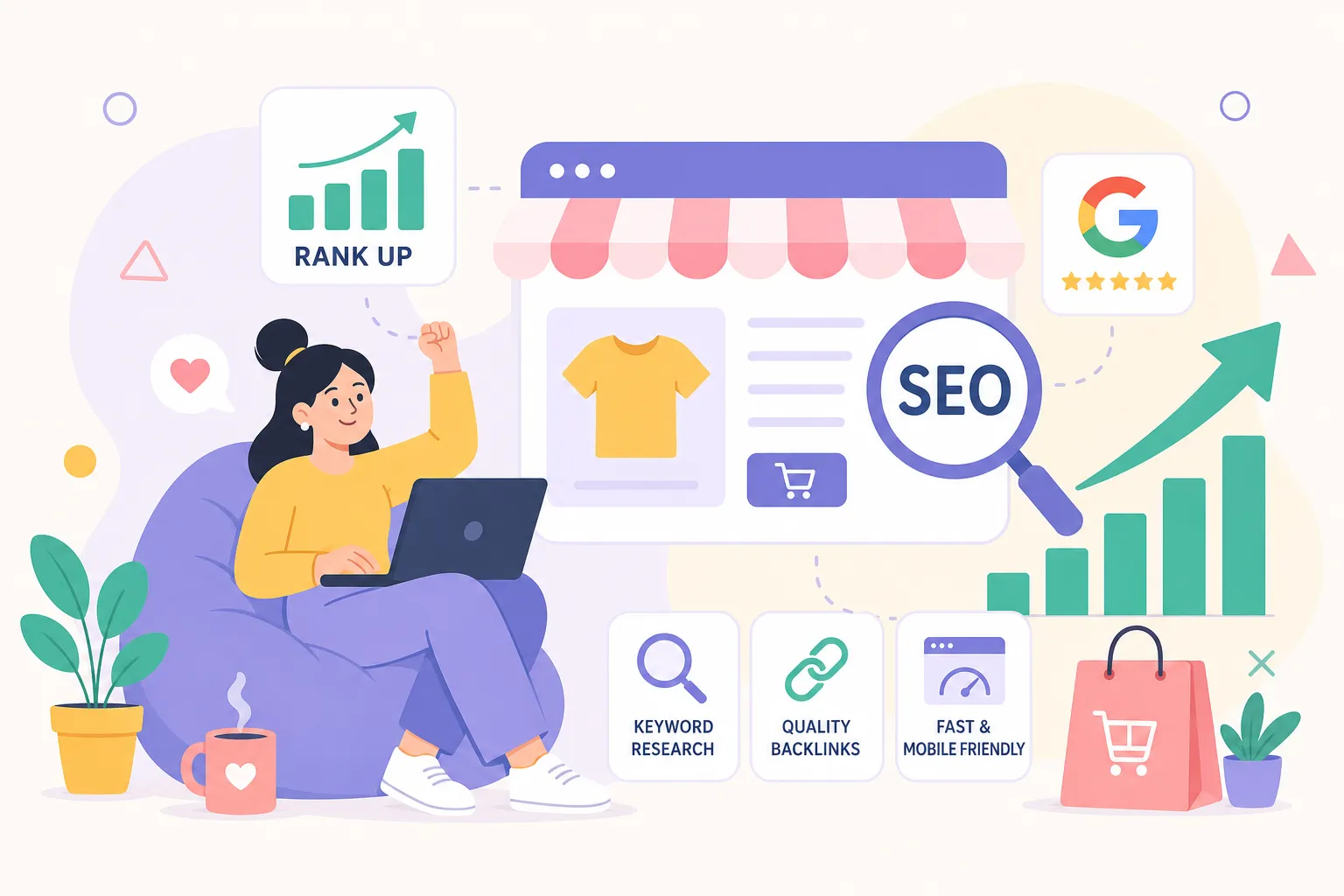
Most small store owners fall into one of two traps: they either skip SEO entirely because it feels overwhelming, or they try to copy strategies built for large retailers with dedicated teams and massive budgets. Both approaches waste time. A Shopify store selling handmade candles doesn’t need the same SEO playbook as Target.
If you’re wondering what is the best SEO strategy for a small online store, the short answer is a prioritized 90-day plan that focuses on the right pages, in the right order, using tools you can afford. That’s exactly what this guide covers. At AISEO Round Table, we publish budget-first SEO guidance built for real business owners, not enterprise marketing managers, and this article is a core part of that resource library.
Over the next few sections, you’ll get a concrete 90-day plan covering six areas: finding quick wins in Google Search Console, optimizing product pages, building smart category structures, fixing common technical problems, creating a simple content plan, and earning backlinks on a tight budget. Each step builds on the last, so the order matters.
What Is the Best SEO Strategy for a Small Online Store? A 90-Day Roadmap
Why impressions without clicks are your lowest-hanging fruit
Google Search Console shows you something incredibly useful: pages your store already appears in search results for, but that almost nobody clicks. These impression-rich, low-CTR pages are your highest-leverage starting point because Google is already showing them. You don’t need to build authority from scratch; you just need to make the listing more compelling.
To find these pages, open the Performance report in GSC, click the Pages tab, and sort by Impressions descending. Then add a CTR filter set to under 3% or 5%. Focus on pages ranking in positions 1 through 20, since those are close enough to the top that better titles and descriptions can produce real click gains fast. This costs nothing and produces results faster than publishing new content from scratch.
How to triage your pages and set a 30-day priority list
Once you have your list, run a simple three-column triage. Pages with high impressions and low CTR need rewritten title tags and meta descriptions. Pages with decent CTR but no conversions need an intent check: are searchers landing on a page that actually sells what they searched for? Pages with zero impressions at all should be set aside for now, because they’re not competing yet and shouldn’t distract you from pages that are.
This triage becomes the foundation of everything else in this guide. Every product page fix, internal link, and content piece you create should connect back to the pages you flagged here. Work the list, not a random assortment of ideas.
How to Optimize Product Pages So They Rank and Get Clicked
Writing product titles that work in search results
The single highest-impact on-page change for both rankings and CTR is the title tag. Based on CTR patterns visible in GSC data across product-heavy sites, the formula that tends to perform best in competitive product categories is: primary keyword near the front, a meaningful qualifier, and the brand name if space allows, all kept under 60 characters. Specific beats generic every time: “Men’s Waterproof Hiking Boots, Wide Fit” outperforms “Trail Boot Model X-200” because it matches what an actual buyer types.
Put the keyword first, add one or two differentiators like size range, material, or use case, and keep it readable. Avoid stuffing multiple attributes in a row. A clean, specific title beats a long, keyword-crammed one in both the rankings and in the mind of the person scanning search results.
Schema markup and meta descriptions: the CTR multipliers most stores skip
Product schema is the code that makes price, stock status, and star ratings appear directly in Google search results as rich snippets. Those visual extras make your listing stand out in a way a plain blue link never will. On Shopify, you can add it through an app from the app store without touching code. On WooCommerce, an SEO plugin handles it from the admin panel by mapping your product fields automatically. For a practical walkthrough on how to optimize product schema in WooCommerce, see this guide.
Meta descriptions don’t directly improve rankings, but a well-written one meaningfully lifts CTR on pages that already appear in search. Write each description like a short ad: lead with the main keyword, state a clear benefit, and end with a soft call to action. Keep it under 160 characters and make it specific to that product, not a generic store tagline copied across every page.
Beyond schema and descriptions, practical ecommerce product page optimization tactics, clear hero images, scannable spec lists, and above-the-fold CTAs, are low-cost changes that consistently increase both clicks and conversions.
Category Page Structure and Internal Linking That Move Rankings
Building category pages around buyer-intent keywords
Category pages often have higher commercial intent than individual product pages, which means ranking one strong category page can drive more revenue than ranking a dozen product pages. The setup is straightforward: a unique H1 that includes the target keyword, a short original paragraph of 100 to 150 words describing the category, and clear links to subcategories and top products. Thin or completely blank category pages are one of the most common SEO mistakes small ecommerce stores make, and fixing them is usually fast.
Treat each category page as a landing page for a specific buyer need, not just a grid of product thumbnails. The introductory copy tells Google what the page is about and tells shoppers they’re in the right place, and both of those signals move rankings.
Internal linking as the lowest-cost authority signal you have
Internal links pass ranking strength from your high-authority pages to the product and category pages that actually make you money. A blog post titled “How to choose the right yoga mat” that links to your yoga mat category page is doing SEO work every day without any additional effort from you. The link signals relevance and routes both Google and your readers toward a conversion page.
Review your existing blog posts and homepage copy today and count how many of them link to your top category and product pages. For most small stores, the answer is “not enough,” and fixing that takes an afternoon, not a budget.
Technical Fixes That Stop Your Store From Leaking Rankings
Duplicate content traps: parameter URLs and faceted navigation
When shoppers filter products by color, size, or price, your platform often creates new URLs for each combination, like ?color=red&size=M. Left unchecked, this generates hundreds of near-identical pages that split your ranking signals and waste the crawl budget Google allocates to your site. (If you want a deeper dive into crawl budget optimization, this article explains the mechanics and fixes.) The fix is to add canonical tags pointing filtered URLs back to the main category page, and to noindex low-value filter combinations that have no real search demand.
Both WooCommerce and Shopify handle this through SEO plugins and apps, so you don’t need a developer. The key is to index your clean base category pages and only allow filter combinations with proven search demand to be indexed. Everything else gets canonicalized or noindexed, which consolidates authority on the pages that matter.
Why This SEO Strategy for a Small Online Store Prioritizes Technical Health
The technical issues that most reliably hold small ecommerce sites back are redirect chains, broken internal links, and slow page speed. A redirect chain means a URL redirects to a second URL, which then redirects to a third. Condense every chain down to a single redirect so link equity doesn’t bleed out at each hop. Broken internal links waste crawl budget and create a frustrating user experience that Google notices.
Screaming Frog’s free tier crawls up to 500 URLs and is the practical tool for finding both problems in under an hour. For a fuller, step-by-step approach to diagnosing these issues, see our technical SEO audit guide. For page speed, focus on getting Core Web Vitals into a passing range using Google’s PageSpeed Insights report, which shows specific recommendations for your actual pages, not generic advice.
A Simple Content Plan for Long-Tail Traffic and Keyword Research
Blog topics that consistently drive organic traffic for niche stores
Certain content formats produce reliable organic traffic for niche product stores, particularly in the context of small business SEO and ecommerce SEO best practices. The most proven ones are: how-to guides related to product use, “best X for Y” comparison posts, buying guides organized by use case or budget, FAQ posts built from real customer questions, and problem-solution posts that address a specific pain point your products solve. These formats work because they match the way real buyers search before they’re ready to purchase.
A practical structure is to build one in-depth pillar guide around each major product category, then add several narrower supporting articles that link back to both the pillar post and the relevant product pages. Repurpose each post into a short social video or email newsletter. It costs almost no extra time and extends your reach without additional keyword research or strategy work.
Finding the right keywords without an expensive tool stack
Start with the free layer: Google Search Console shows you what you already rank for, and Google’s autocomplete and “People Also Ask” boxes give you free keyword ideas directly from real search behavior. These two sources alone are enough to fill a 90-day content calendar for most small stores. For more tactics on being discoverable without paid media, check our piece on how to get found online without spending on ads.
When you’re ready to scale up your keyword research or track rankings consistently, one paid tool is worth the cost.
If you want one paid tool worth the investment, AISEO Round Table publishes a beginner-friendly Mangools review that covers exactly how KWFinder and SERPWatcher work together for keyword discovery, difficulty scoring, and rank tracking, all in one clean interface at around $29 to $49 per month. It’s a practical fit for small store owners who want more than Google’s free data but don’t need an enterprise platform with a four-figure monthly price tag. Start with the free tools, and add a paid option when you’re ready to go deeper.
Link Building and Measuring Progress on a Tight Budget
Low-cost tactics that actually earn backlinks for small stores
Backlinks matter, but they’re the last priority in this plan, not the first. On-page and technical work produces faster results with less effort, so fix what you have before investing time in link acquisition. When you’re ready, start with the free-first approach: ask suppliers and brand partners to list your store on their “Where to Buy” pages, submit to niche and local directories (see our local SEO strategies for directory best practices), and participate genuinely in forums, Reddit threads, and Facebook groups as an expert in your product space.
User-generated content like customer reviews and product photos creates fresh indexable content and builds the kind of social proof that earns natural links over time. Guest posting on complementary blogs and reclaiming unlinked brand mentions round out a realistic link strategy for a small store. None of these require a paid outreach tool or a PR budget. For practical tactics on how to build backlinks for ecommerce, this guide offers straightforward starter ideas that work on a small budget.
How to measure whether your SEO is working
Track three numbers on a monthly cadence: organic sessions in GA4, total impressions and average position in Google Search Console, and conversions from organic traffic. Checking daily creates noise and leads to bad decisions based on normal fluctuation. Monthly reviews give you enough data to see real trends and make confident changes.
As your rankings improve, new pages will surface in your GSC impressions report with low CTR, which means the triage process from section one repeats. That cycle of finding impression gaps, fixing titles and content, and monitoring results is the actual work of ecommerce SEO for online stores. It’s not glamorous, but it compounds over time in a way that paid traffic never does.
The Best SEO Strategy Is the Most Prioritized One
Now you know what is the best SEO strategy for a small online store: start with GSC triage, move to product and category page optimization, handle technical cleanup, then build out content and links. The stores that win at SEO aren’t the ones with the most comprehensive plans, they’re the ones that execute in the right order and don’t skip steps. Doing them in sequence keeps you from making the classic mistake of publishing new content on a technically broken site that Google can barely crawl.
Every tactic in this guide reflects proven ecommerce SEO best practices and is either free or under $50 per month. None of them require an agency, a developer, or a six-figure tools budget. For a compact overview of practical approaches to SEO on a budget, see this resource. What they require is consistent execution over 90 days.
Here’s your day one action: open Google Search Console right now, pull the Performance report, sort by impressions, and identify the first three pages with high visibility and low CTR. Write those URLs down. Those are the pages you fix this week. Everything else follows from there.